Gen Z Hasn’t Abandoned Mainstream Politics – Mainstream Politics Has Abandoned Gen Z
This year sees the third iteration of GO Justice’s Journalism for Social Change Project. The initiative was designed to support students interested in social justice to develop their journalistic writing skills and create a finished piece of writing for publication.
A small group of students was selected to work with a journalist to learn writing techniques and develop story ideas before working on a draft for publication.
The School of Law is delighted to be publishing this series as part of Pro Bono Week 2026, 2 November - 6 November. You can find details of the activities that GO Justice is running as part of Pro Bono Week on the GO Justice Centre LinkedIn page.
By Joshua Holmes
It started with a conversation in a car back from Loch Lomond. Someone was telling me that all their friends had voted for the Scottish Greens in the recent Holyrood Election. In my own circle, the conversation was very different, as many of my friends had not voted at all. Two groups of young people with two very different responses to the same political system. Yet, both point to the same problem: a generation struggling to find its home in British politics.
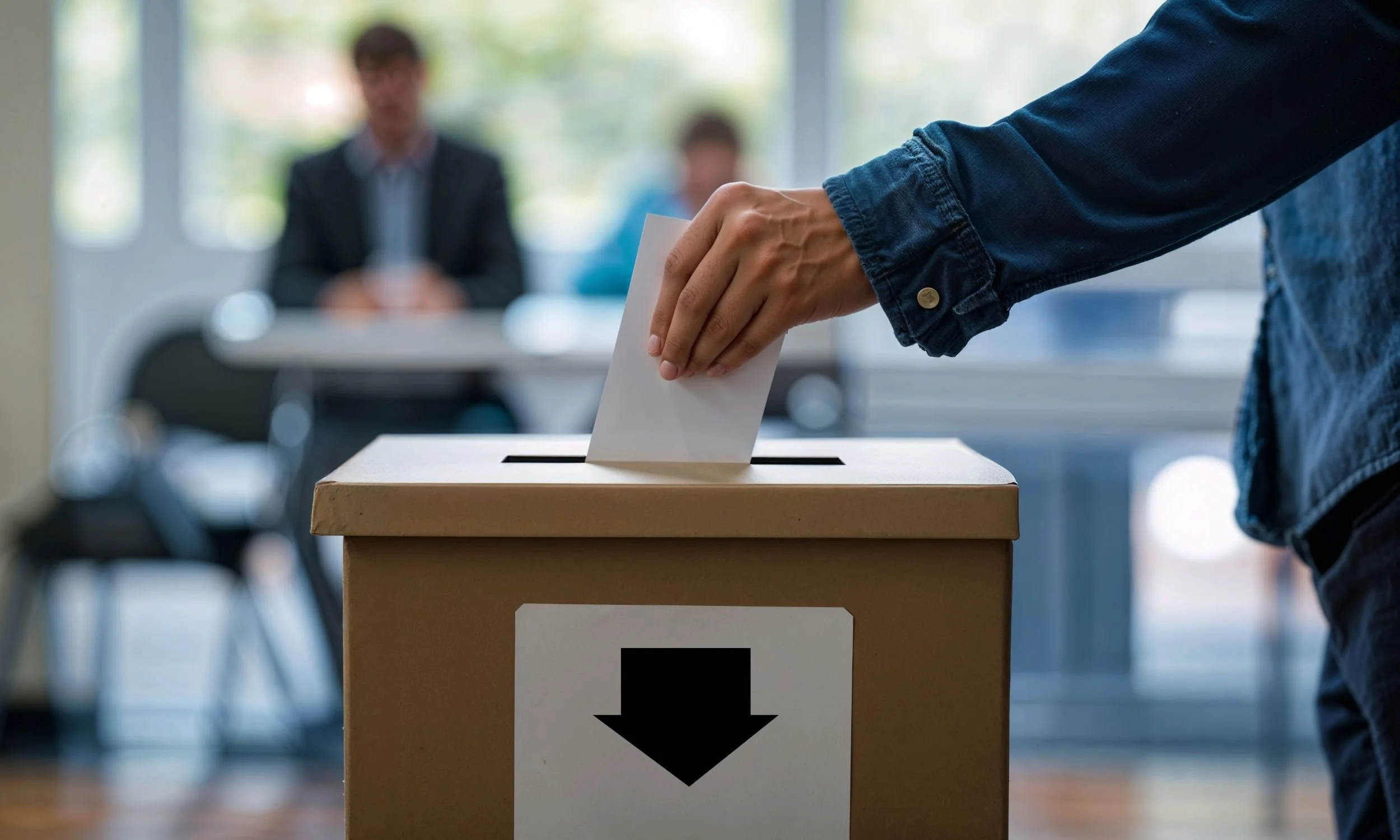
The evidence confirms that the conversation in my car wasn’t unusual. Only 53% of Scots voted in the 2026 Holyrood Election, while the Scottish Greens won the under-30 vote according to YouGov’s analysis.
Nor is this phenomenon confined to Scotland. At the 2024 General Election, people aged between 18 and 25 were least likely to vote, according to the British Election Study. A recent Ipsos study for The Rest is Politics found that those in the 18-to-34 age group were more than twice as likely as the general population to say they would vote Green. Zack Polanski, meanwhile, was the only party leader with a positive net approval rating among adults aged 34 and under.
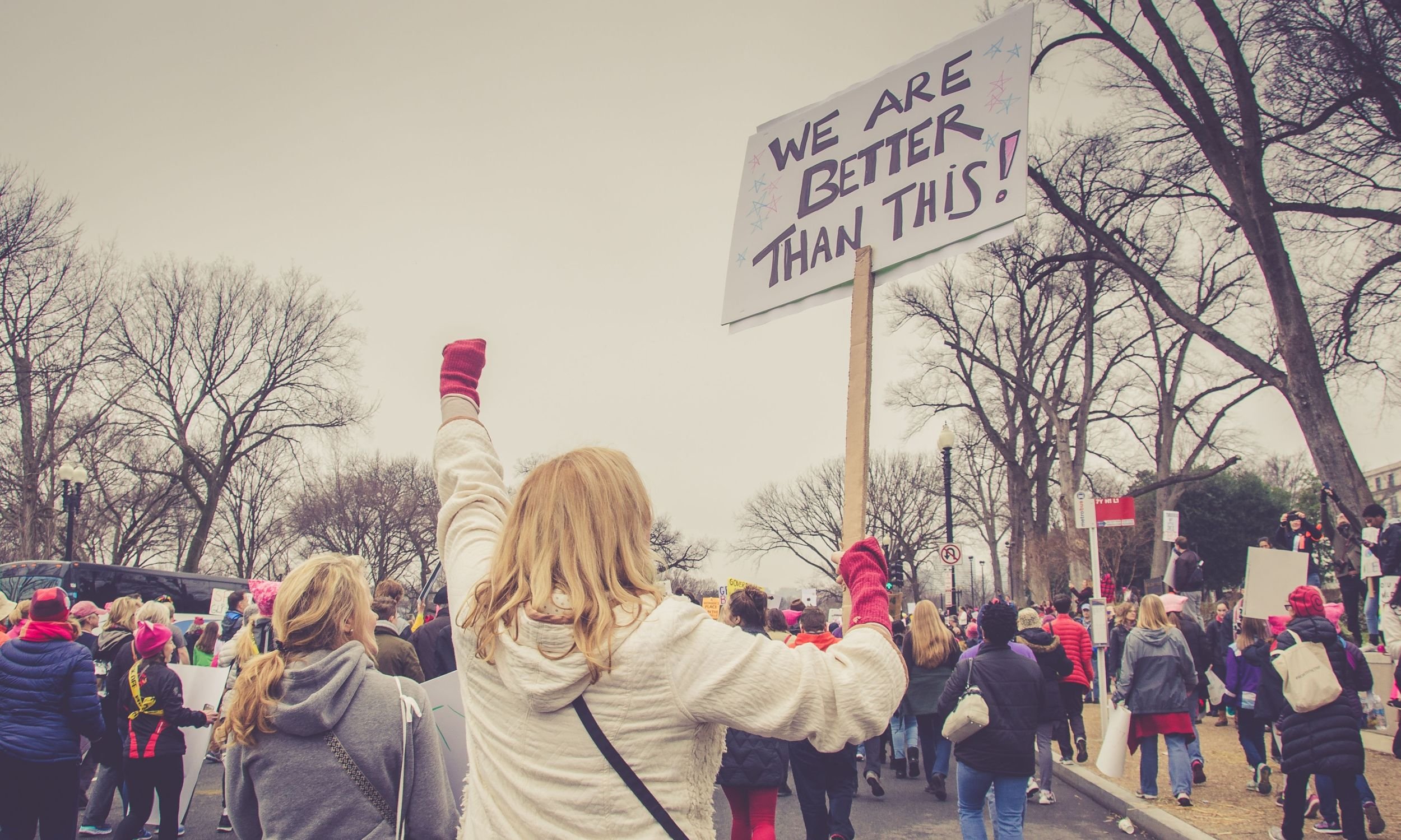
These figures suggest a generation that is increasingly looking beyond the parties that have traditionally dominated British politics. While it is tempting to label this support for alternative parties as youthful rebellion, or to dismiss their disengagement as laziness, perhaps we are looking at the problem from the wrong angle. Gen Z hasn’t necessarily lost interest in politics, but rather in those who claim to represent it.
Their frustration can be captured with brutal simplicity: they are told to get a degree that guarantees them nothing, to get a job which AI is about to take, to buy a house which costs twenty times their salary, and to have kids when they can barely afford to save up for themselves. These traditional milestones of adulthood feel increasingly out of reach, and following the conventional path to success is often fruitless. Meanwhile, the ones telling them what to do are those who built their lives in very different economic circumstances.
A university degree, often presented as a route to opportunity, no longer guarantees a graduate job. Advertised graduate vacancies in the UK have fallen to 8,383, down almost half on the previous year, according to Adzuna. Nor is a degree the same job market advantage that it once was. The proportion of 25-to-34 year-olds in the UK with a higher education qualification rose from 29% in 2000 to 57% in 2021, according to the OECD. The ONS estimated that almost one million people aged between 16 and 24 were not in education, employment or training in June 2026. Between the over-qualified and the out-of-work, it is hard to find a young graduate who feels they are winning.
Housing is another source of frustration. The average first-time buyer in England is 34, according to the Skipton Group Home Affordability Index. Saving for a deposit while paying rent, bills and student-related costs leaves many young people wondering how they are supposed to get ahead. It is no wonder that 7.2 million people aged 15-34 were still living with their parents in 2025, representing over 42% of that age group. Among 20 to 34-year-olds, the ONS has recorded a rise from 25.4% in 2015 to 28.7% in 2025.
Then there is the cost of living, the mounting pressure on the NHS, irreversible climate change, and horrific international conflicts – all important to young people, and all issues that our political system seems unable or unwilling to tackle.
Without legitimate progress, political debate struggles even to pay convincing lip service to these everyday realities. Governments announce targets, parties trade accusations, and leaders fight for their own survival. In July, Andy Burnham became the UK’s seventh Prime Minister in ten years. For a generation whose first experience of politics has been a revolving door of leaders and a steady decline in their own prospects, it is hard to believe the next one will be any different.
The problem, therefore, is not that mainstream parties have no policies on housing, employment or public services. They do. It is that having a policy is not the same as convincing people it will work.
The Greens, meanwhile, offer a message centred on climate action, economic fairness and redistribution. For some young people, voting for an alternative party is a way to demand change. For others, not voting may reflect a belief that none of the available choices will make a meaningful difference. These are not identical responses, and it would be wrong to assume that every non-voter feels politically abandoned. Nevertheless, both deserve to be understood rather than dismissed as not caring.
Education is not free from blame. Scotland offers a dedicated politics subject in Modern Studies, but beyond the early years of secondary school it is optional. England is similar, with citizenship courses being compulsory in maintained schools, but GCSE Citizenship Studies and A-level Politics are optional. That matters: a 2009 study of around 1,600 Scottish pupils found that those taking Modern Studies knew more about politics, showed more interest in it through watching TV or reading newspapers, and were less cynical than classmates taking history or geography. Although the research is older, it raises a question worth asking: should political understanding depend so heavily on the subjects pupils choose? For many young people, social media has become the principal source of political information instead.
Through social media, candidates can speak directly to voters through short videos, online campaigns, and language that reflects their everyday concerns. Zohran Mamdani's New York mayoral campaign demonstrated the potential of this approach, placing affordability at the centre of a highly visible campaign. The lesson is not that Britain should simply copy an American candidate, but that political messages can resonate when they connect policy to the tangible realities of people's lives.
Of course, good communication is not proof of effective government. Simple solutions can hide difficult trade-offs, and anti-establishment parties must be scrutinised just as much as those they criticise. Neither frustration nor popularity guarantees a proposed policy will work, but mainstream parties should be asking themselves why their own messages are failing to convince so many young people.
The answer cannot simply be better social media campaigns or more relatable politicians. Communication matters, but credibility matters more. Young voters need to see tangible progress on the issues that they care about the most. They need to believe that political promises will lead to practical improvements, not another round of broken promises that leaves them more disengaged.
My conversation in the car was anecdotal, but it captured sentiments that should concern politicians: young people turning towards alternatives, and others deciding not to participate at all. Both are demanding a different kind of politics, and if that demand goes unanswered, both risk ending in the same place: a generation disengaged from politics en masse. If mainstream parties want to regain their trust, they must do more than tell young people that their future matters. They must demonstrate that it does.
Because Gen Z hasn’t necessarily abandoned mainstream politics. It may simply be waiting for mainstream politics to stop abandoning Gen Z.
Joshua Holmes is a Diploma in Professional Legal Practice Student at the University of Glasgow.