University of Wroclaw study trip - comparing legal traditions
By Jamie Breen, Ganna Gebely and Alexander McCourt
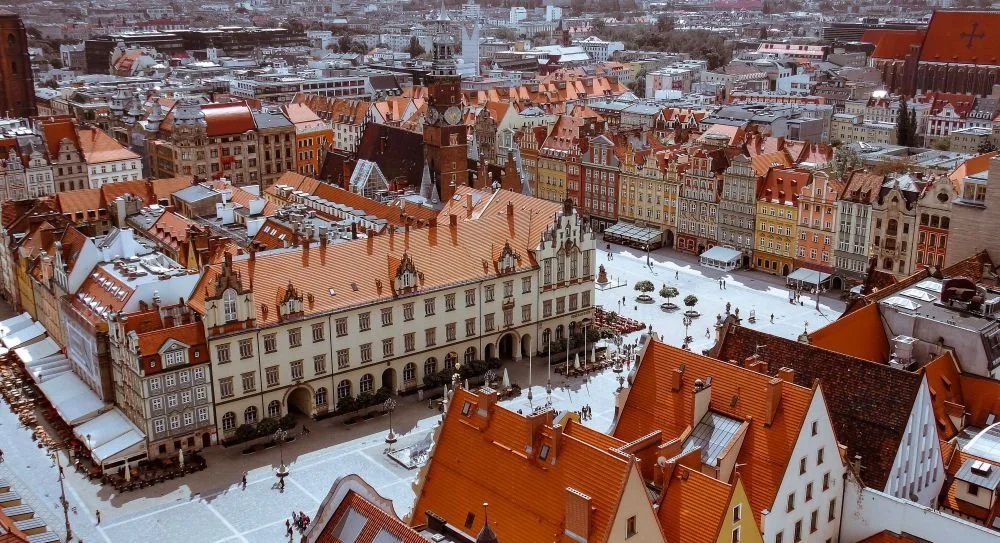
In March this year, a group of UofG Law students took part in a study visit to the University of Wroclaw in Poland. Supported by the UofG short-term mobility team, the initiative was designed to give students a taste of studying abroad ahead of the formal GoAbroad exchange opening up.
One of the highlights of our study visit was taking part in a seminar with Polish law students at the University of Wroclaw, introducing our own legal systems and discussing our observations. Using our own knowledge from our modules including lecture notes and tutorial analysis, we prepared a short presentation on an aspect of law within the UK. Topics included devolution in Scotland and the doctrine of parliamentary sovereignty to illustrate an idea of Scotland’s unique legal position and the importance of legal tradition in the UK. This allowed the Polish students to gain a better understanding of what we study at the University of Glasgow and opened discussions about the similarities and differences between our respective legal systems.
Throughout the seminar, we had the opportunity to hear from the Polish students about their areas of study in law. Topics varied widely, but one interesting topic was the use of modern technology in trials. The focus was on the use of live video feeds in court as an alternative to in-person testimony, particularly for witness statements. An increasingly popular method in emotionally fraught cases or scenarios with vulnerable witnesses, we heard about the potential challenges this method has. While being beneficial to vulnerable witnesses who may feel more comfortable giving evidence over video, there is a question as to whether this infringes upon the accused’s ECHR Article 6 right to a fair trial. Additionally, it is at risk of discriminating against those who are not technologically literate or who live in rural areas without internet connection. The polish student outlined the solution to the latter problem as being dedicated ‘outreach teams’ who would travel to the witness’ home and set up the video system for them.
Constitutions were also an important topic of discussion. We got to hear from some of the students about the ongoing constitutional controversy in Poland. We learnt about the accusations levelled against the Polish government of breaching the rule of law as they seek to overhaul the Supreme Court. It is a deeply contentious issue surrounding the dismissal of several Supreme Court judges and making strongly politically charged appointments.
Overall, it was a fascinating insight into a legal system we knew nothing about. Ensuring that the rule of law is upheld is a very important issue, not just in Poland and Scotland but every country.
The short-term exchange to Wroclaw was an invaluable experience for our academic and personal growth. Comparing Scots and civil law traditions with the polish students demonstrated the importance of studying legal issues from a comparative viewpoint, by giving us wider legal and social perspectives. Exploring Poland's history, politics and culture allowed us to see the practical benefits of studying abroad. The opportunity to navigate a new city and tackle the linguistic and cultural differences improved our adaptability and confidence needed to study abroad. The exchange provided early practical experiences outside of our lectures - and gives us a more global outlook to learning.