The UK government’s crackdown is eroding our protest rights – here’s why we can’t let that happen
This year sees the third iteration of GO Justice’s Journalism for Social Change Project. The initiative was designed to support students interested in social justice to develop their journalistic writing skills and create a finished piece of writing for publication.
A small group of students was selected to work with a journalist to learn writing techniques and develop story ideas before working on a draft for publication.
The School of Law is delighted to be publishing this series as part of Pro Bono Week 2026, 2 November - 6 November. You can find details of the activities that GO Justice is running as part of Pro Bono Week on the GO Justice Centre LinkedIn page.
By Ganna Gebely
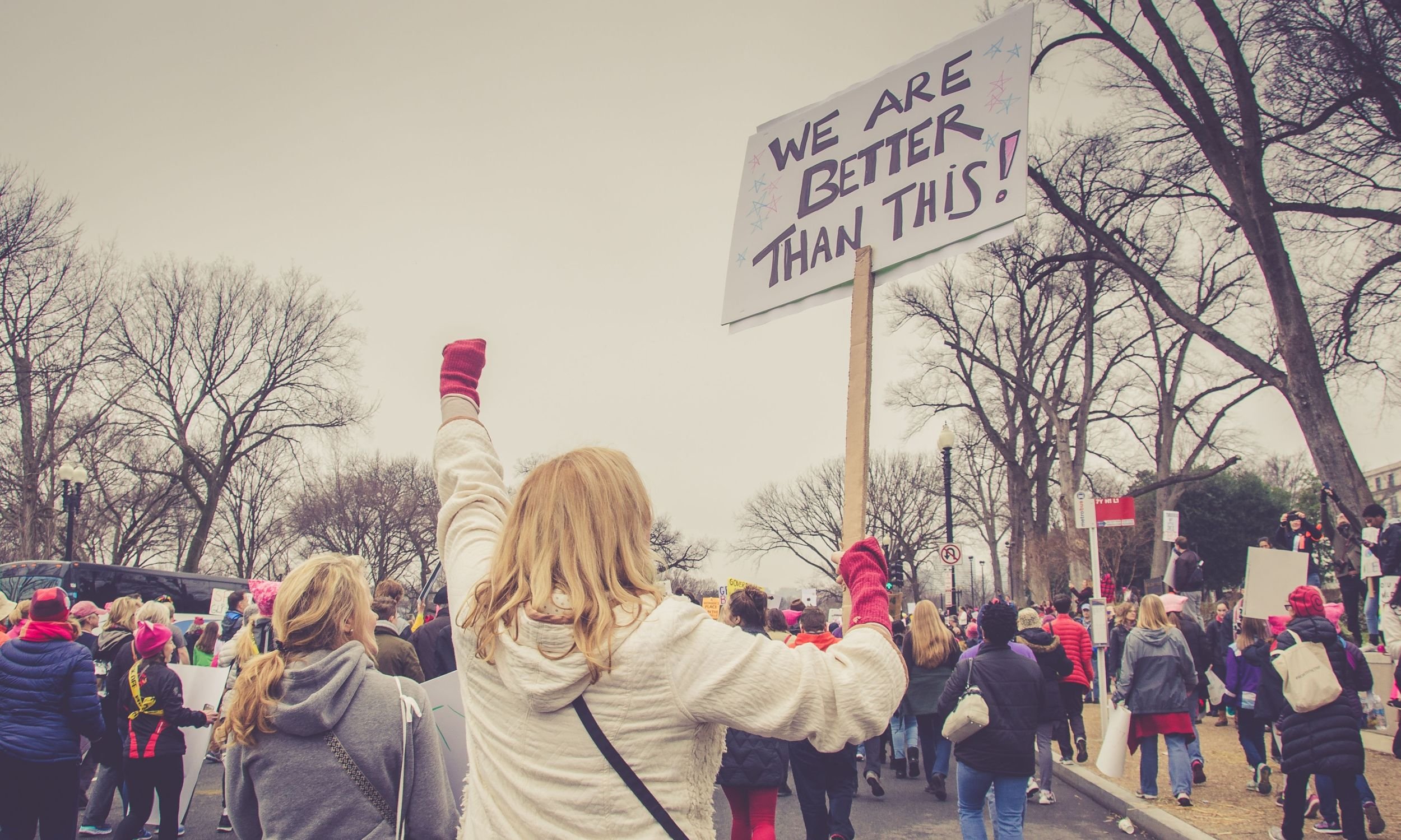
Walking slowly down a road. Holding signs outside parliament. Sitting in and blocking roads.
These are the familiar features of modern protest in the UK. We’re also getting more accustomed to seeing mass arrests, activists carried away by police, and headlines condemning the chaos.
From Palestine Action marches to Just Stop Oil activists throwing soup at a painting, the process seems straightforward. Protestors break the law and police restore it. This narrative however raises an uneasy question. How has disruptive protest become something the UK finds intolerable?
The right to protest is a cornerstone of democracy, protected both internationally under the European Convention on Human Rights (ECHR) and domestically under the Human Rights Act (1998). These rights are not absolute, meaning they can be interfered with and restricted by public bodies where it is deemed justified, proportionate and necessary.
Parliament's modern crackdown on protest rights is undeniable. Through a series of sweeping and loosely-defined laws, criminalising disorderly protest tactics has never been easier.
Legislation introduced in 2022 has now created statutory offences for "intentionally or recklessly causing public nuisance". Police are given more powers to arrest and punish by lowering the threshold for what’s criminal, and increasing the severity of some punishments from fines to imprisonment. The most shocking aspect is the police power to restrict demonstrations based on how loud they are, with a muddled explanation of what is an actionable level of sound.
The following year, the government went even further by criminalising common tactics such as interfering with key infrastructure and individuals attaching themselves to other people or objects. This came after years of highly visible campaigns by Just Stop Oil and Insulate Britain using these approaches. So it is unsurprising that 395 protesters were arrested the same year this legislation passed.
Attempts to challenge this legislation show the limitations created by the courts too. In the case of R v Sarti (2025), several Just Stop Oil protesters were sentenced for interfering with national infrastructure, by engaging in slow march protests – leading to major congestion – and ignoring police orders to leave.
The crackdown isn’t just an issue for climate activism. The proscription of Palestine Action this July criminalises anyone who joins or supports the organisation under the Terrorism Act. The boom in mass arrests, even for holding signs reading 'I oppose genocide, I support Palestine Action', highlights the country’s swing to treating solidarity as a national security threat.
The concern isn't just that protesters face arrest. It's that the law increasingly treats protest itself as a criminal matter.
Human Rights Watch warns that: “By granting broad discretionary powers to police and criminalising peaceful protest tactics, the UK state risks silencing dissenting voices, discouraging civic participation, eroding democratic accountability, and ultimately fraying the fabric of democracy itself.”
The point of protest is being obscured. It is rarely a first choice, but what we turn to when ordinary political channels have failed. Decades of warnings about climate change or demands for sanctions and divestment against Israel have been met with sluggish and inadequate government response.
Instead of confronting the real grievances at the root of a protest, attention is being redirected to the inconvenience caused. An artificial divide is created between protesters and the wider public, as though the two are separate groups. Public frustration is then directed at the person blocking the road, rather than the political negligence that brought them there.
Disruptive protest is not always right. Protests can be twisted to advance discriminatory and exclusionary causes, seen with the race riots this summer in Glasgow. But this does not make protest itself illegitimate. It’s a political tactic, and history shows why attempts to suppress it should concern us.
Take the Suffragettes, whose actions ranged from damaging property to obstructing public spaces to chaining themselves onto objects. This strategy of ‘deeds not words’ is what propelled the UK to grant the enfranchisement of some women in 1918. Across the pond, the American civil rights movement relied on boycotts, sit-ins, and marches as strategic interferences with everyday life. Campaigns against South African apartheid used these techniques too, including holding continuous demonstrations outside the South African embassy in London.
What we now see as necessary strides to justice were once viewed as irresponsible and inconvenient, and would likely attract penalties under today’s laws. Protest’s value is often only recognised in retrospect.
This doesn’t mean that every act of protest should be immune from consequences. The UK can (and should) regulate violence, intimidation and genuine threats to public safety. But this must not be conflated with tactics designed to draw attention and create political pressure.
If parliament keeps narrowing the definitions of acceptable protest, we risk weakening one of the most important forms of political participation we have. Protests are not meant to be comfortable. They are meant to be seen. They are meant to be heard. They are meant to be felt. Any functional democracy must tolerate exactly that.
Ganna Gebely is a Scots Law/Politics student at the University of Glasgow interested in human rights and social justice.